

Stencilling has been a popular form of decorative art. It is the method of painting that involves applying paint, ink or dye through a pattern that is either pre-cut (from manufacturers) or cut from any durable materials (handmade) and reposition it to be re-used. It can also be considered as a method of positive printing. The image that is cut out is the image that you will see when the paint is applied. Stencilling can be done on paper, wood, fabric, glass, terracotta pots, tiles, furniture and walls. In Art at Home Studio, I will try to do as many samples as possible; so do come back as often as possible for new updates,
Refer to stencil materials at Tips for stencilling
Making your own stencils
We can create our own stencils with a little bit of sketching and experimenting. Look around the home for home ideas; the leaves motifs on your table cloth, the floral motifs on your curtains, etc. 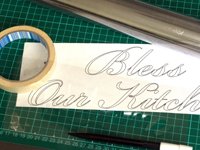
 Choose a simple shape or simplify the object you have chosen. (I print out outline letterings)
Draw out the outlines of your object by tracing .
Fill the outlines with a marker so that you can see what the image will look like as a stencil.
With a graphite paper, transfer outline design over to stencil card or acetate.
Cut out the shapes with a sharp scalpel and cutting mat.
Begin cutting the smaller shapes before the larger shapes. If the larger shape is cut first, it may damage the stencil materiel and becomes difficult to cut the small shapes. You can also turn the stencil around as you work.
Stencils on Fabric (T-shirts)
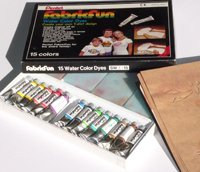 I have bought this "Pentel Fabric Fun" water colour dyes years ago and have created some children T-shirts with my kids. To work on this project, you need fabric paints, ready stencils, stencil brush or foam rubber, masking tape, plastic sheet and styro foam.
Steps
Place a plastic sheet below the inside of your T-shirt to protect being stained.
Place T-shirt (together with plastic sheet ) over a styro foam or cardboard and pin it over to protect from slipping off while stencilling.
Simply place the stencil on your T-shirt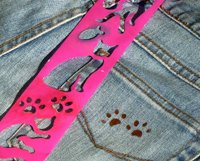
Dip the sponge or foam rubber into the fablic paint and pat colour lightly onto cut out portion of the stencil.
For durability iron it over
Take notes: Do not mix the dyes with water but use directly from the squeezed out colours. Clean the stencil with water after use.